
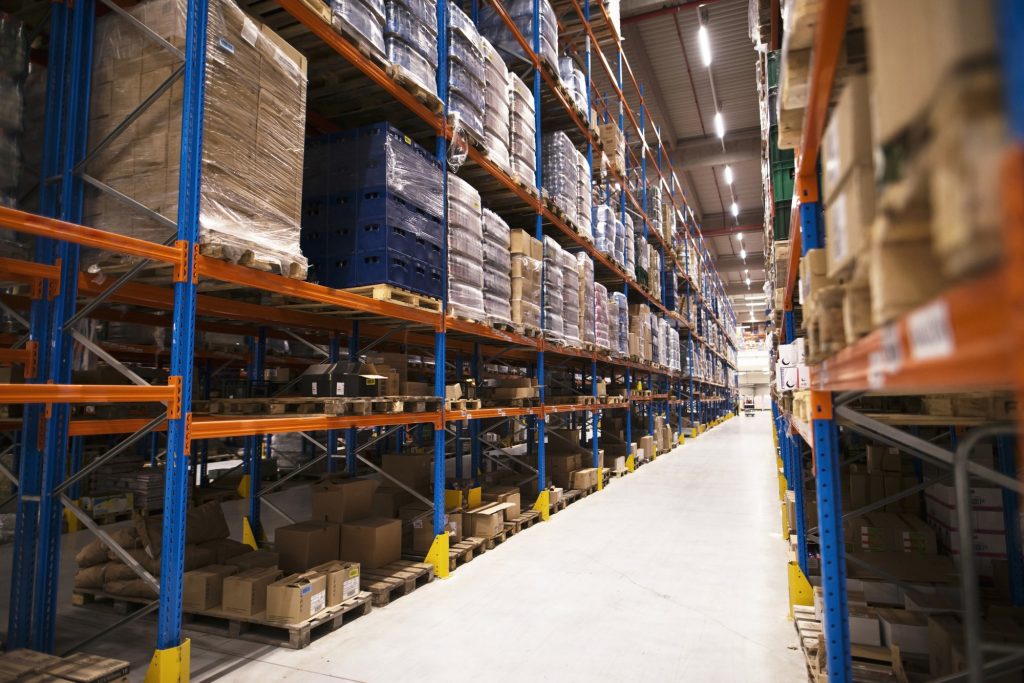
Warehouse cleaning is the scheduled cleaning of an industrial storage or distribution building, covering the concrete slab, the overhead steel, the racking, the dock area and the welfare spaces. It is a different trade from office janitorial: different equipment, different working heights, and almost always a different shift.
Most people asking the question are asking one of three more specific things. What does a warehouse cleaning contractor actually do? How often does a building need it? And what should it cost? This guide answers all three, with the numbers and the scope detail that get left out of most service pages.
What warehouse cleaning covers
A full warehouse clean divides into six zones. Almost every quote you receive will be built from some combination of them, and the single most useful thing you can do when comparing bids is to make sure each one is priced against the same six.
1. Floors
The slab is the largest surface in the building and the one that sets how the whole facility reads. A proper floor clean means machine sweeping to lift loose debris, then auto-scrubbing with the right chemistry for the surface, whether that is sealed concrete, polished concrete, epoxy or VCT. Forklift lanes and turning points need degreaser rather than general-purpose detergent, because what accumulates there is rubber and hydraulic residue rather than dust. Edges, corners and column bases will not be reached by a ride-on machine and have to be detailed by hand.
2. Overhead and high dusting
Dust settles on joists, beams, conduit runs, sprinkler pipework, HVAC diffusers and light fixtures, and in a building with 30 ft clear height nobody has touched it since handover. This work needs a scissor lift or boom lift, HEPA-filtered vacuums, and drop protection over anything below. The critical detail to check in a quote: dust should be collected by vacuum, not blown down with compressed air onto your product and your freshly cleaned slab.
3. Racking and storage
Upright frames, beams and wire decking collect dust and residue that transfers onto cartons. The clean also pulls shrink wrap, banding, broken pallets and loose debris out of the bays. This is the zone most affected by whether the building is loaded, which is why quotes vary so much between an empty building and a live one.
4. Docks and staging
Dock levelers, pits, bumpers, tracks and door seals accumulate a mixture of grit, grease and organic debris, and the pits in particular are a pest harbourage risk. The apron outside can be pressure washed where site drainage and local stormwater rules allow it, which is a genuine constraint worth asking about rather than assuming.
5. Offices and welfare areas
Front office, dispatch, break rooms and restrooms. This is the one zone that looks like conventional commercial cleaning, and it is usually the only zone a nightly janitorial contract already covers.
6. Waste and debris removal
Pallets, cardboard, wrap and general waste collected and removed, separated for recycling where a stream exists. On a deep clean this frequently needs a roll-off container rather than the building’s existing compactor.
How warehouse cleaning differs from office janitorial
The distinction matters because it explains why your existing cleaning contract has not touched most of the building.
| Factor | Office janitorial | Warehouse cleaning |
| Typical area per visit | 5,000 to 30,000 sq ft | 50,000 to 500,000 sq ft |
| Main equipment | Vacuums, mops, carts | Ride-on scrubbers, sweepers, lifts, HEPA vacuums |
| Working height | Reachable from the floor | Up to 40 ft, lift and fall protection required |
| Crew training | General janitorial | Powered equipment, lift certification, site JHA |
| Scheduling | After hours, short shift | Around production, often multi-night |
| Priced by | Hours or per visit | Square footage and scope |
A nightly janitorial crew scoped for restrooms, break rooms and the front office is not equipped to scrub 140,000 square feet of slab or take dust off the joists, and no reasonable contract expects them to. That work sits outside almost every recurring agreement, which is why it accumulates until something forces it.
Recurring versus one-time warehouse cleaning
These are two different products and they are priced differently.
Recurring warehouse cleaning is an ongoing programme, typically three to five nights a week, covering floors, welfare areas and waste on a set frequency. In metro Atlanta this generally runs $0.05 to $0.12 per square foot per month for general storage and distribution, rising to $0.10 to $0.16 for food-grade and temperature-controlled space. Day porter coverage during operating hours adds roughly $18 to $25 per hour.
One-time warehouse cleaning is a single scheduled deep clean with no contract attached. It goes deeper than any recurring visit, because it includes the work that recurring programmes explicitly exclude: overhead dusting from a lift, racking wipe-down, dock pits, and a full machine scrub of the entire slab rather than the main aisles.
The two are not alternatives so much as different jobs. Buildings on a recurring programme still book a one-time deep clean before an audit or at lease end, because the recurring scope was never designed to cover it.
How often does a warehouse need cleaning?
There is no single answer, but there is a reasonable default by zone:
- Floors, main aisles: nightly to weekly, depending on traffic and whether you handle dusty product
- Floors, full slab machine scrub: monthly to quarterly
- Restrooms and break rooms: daily, non-negotiable, and a compliance matter under OSHA sanitation rules
- Dock area and levelers: weekly, more often in wet months
- Racking wipe-down: annually, or before any customer or certification audit
- Overhead and high dusting: annually for most buildings, twice yearly for food-grade, or whenever sprinkler heads start showing visible accumulation
Four events override the schedule entirely and should trigger a deep clean regardless of when the last one happened: a scheduled audit, a lease ending, a change of tenant or third-party logistics provider, and the end of a peak season the day crew had no window to catch up from.
What does warehouse cleaning cost?
One-time work in metro Atlanta falls into these bands. Your figure moves within them based on ceiling height, floor condition, how much racking stays loaded, and whether we get the building empty or work around production.
| Type of job | Typical range |
| Floors only, sweep and scrub, light soil | $0.06 to $0.10 per sq ft |
| Full one-time deep clean, all six zones | $0.14 to $0.28 per sq ft |
| Post-construction final clean | $0.20 to $0.40 per sq ft |
| Small or irregular jobs, priced by labour | $45 to $65 per cleaner-hour |
On a 100,000 sq ft building, a full deep clean therefore lands somewhere between $14,000 and $28,000, and takes most crews three to four nights. A floors-only scrub of the same building is usually one night with two machines. There is more detail on what moves each number on our pricing page.
Is warehouse cleaning a compliance requirement?
Partly, yes. OSHA’s materials handling standard, 29 CFR 1910.176(c), requires that storage areas be kept free from accumulation of materials that constitute hazards from tripping, fire, explosion or pest harbourage. The walking-working surfaces standard at 1910.22 requires workplaces, passageways and storerooms to be kept clean, orderly and sanitary, and 1910.141 sets sanitation requirements for restrooms and break areas.
None of that specifies a cleaning frequency, and no inspector will cite you for dusty joists on their own. What gets cited is the consequence: a blocked aisle, a slip hazard on a contaminated slab, a pest problem traced back to a dock pit. Beyond OSHA, food-grade and pharmaceutical facilities face far more prescriptive requirements under AIB, SQF or BRC audits, where cleaning records and documented chemistry are themselves part of the assessment.
Tenant or landlord: who pays?
In most industrial leases in Georgia, interior cleaning and housekeeping sit with the tenant, while roof, structure and exterior sit with the landlord. Where it gets contested is at lease end. Return-to-condition clauses typically require the slab, dock seals and racking anchor points to be handed back in a defined state, and a landlord inspection will look hardest at exactly those three. A deep clean before the walkthrough usually costs a fraction of the deduction it prevents. Read your specific clause before assuming either way.
How to scope a warehouse clean properly
- Get a walkthrough, not a phone quote. Thirty to forty-five minutes on site tells a contractor the floor type, the real condition, the lift access and what stays loaded. A price given without that is a guess that will be revised.
- Insist on a line-item scope sheet. One number for “warehouse cleaning” cannot be compared against anything. Six line items can.
- Confirm insurance before the crew arrives. General liability, commercial auto and workers’ compensation, with a certificate naming your entity as additional insured.
- Ask what happens to the dust. Vacuum collection or compressed air is the fastest way to tell a serious contractor from a cheap one.
- Agree the punch list process. Who walks the building at the end, and what happens if something is missed.
Our warehouse cleaning checklist breaks the work down task by task if you want to build your own scope sheet, and we have compared the main warehouse cleaning companies in Georgia if you are gathering bids.
Frequently asked questions
Does the warehouse need to be empty?
No. Most work happens around loaded racking. An empty building is faster and therefore cheaper, so timing a deep clean for a gap between tenants or seasons is worth doing if you have the choice, but it is not a requirement.
How long does a warehouse clean take?
A 100,000 sq ft floor scrub is typically one night with two machines. A full deep clean of the same building runs three to four nights. Post-construction cleaning takes longer, because drywall dust settles more than once.
Can it be done without stopping operations?
Almost always. The work runs off-shift, at night or over a weekend, and a contractor should be scheduling around your shift pattern rather than asking you to pause shipping.
What is the difference between warehouse cleaning and industrial cleaning?
Industrial cleaning is the broader category and includes manufacturing plants, process equipment and production lines. Warehouse cleaning is the storage and distribution subset of it: slab, steel, racking and docks, with no process equipment involved.
Do I need a specialist, or can my janitorial contractor do it?
If the scope is restrooms, break rooms and office areas, your existing contractor is fine. Once it involves ride-on scrubbers, work above 25 ft or a lift, it needs a contractor with that equipment and the certification to operate it.
Getting a number for your building
The fastest route to a real figure is a walkthrough. We cover metro Atlanta and quote one-time work from around 10,000 sq ft. Below that, an hourly crew usually works out cheaper and we will tell you so.